System development isn’t just about coding—it’s about creating smart, scalable, and sustainable solutions that power modern businesses. Whether you’re building software, automating workflows, or designing enterprise platforms, mastering system development is the ultimate key to digital transformation and long-term efficiency.




Understanding the Core of System Development

At its heart, system development is the process of designing, building, testing, and deploying information systems to meet specific organizational needs. It’s a structured journey that transforms abstract ideas into functional technology solutions. This process spans industries—from healthcare and finance to education and logistics—making it one of the most critical disciplines in today’s digital economy.
What Exactly Is System Development?
System development refers to a systematic approach to creating, modifying, and maintaining software systems. It involves a series of well-defined phases, from initial planning to post-deployment support. Unlike ad-hoc coding, system development follows methodologies that ensure reliability, scalability, and maintainability.
- It integrates user requirements with technical design.
- It emphasizes lifecycle management from concept to retirement.
- It supports both custom-built and off-the-shelf system integration.
“System development is not just about writing code—it’s about solving real-world problems with technology.” — IEEE Computer Society
The Evolution of System Development Over Decades
The history of system development traces back to the 1960s, when large-scale mainframe systems required rigorous planning. The introduction of the Waterfall model marked the first formalized approach. Over time, rapid technological changes—like the rise of personal computers, the internet, and cloud computing—forced the evolution of more flexible models.
- 1960s–1980s: Structured programming and Waterfall dominated.
- 1990s: Object-oriented design and prototyping gained traction.
- 2000s–Present: Agile, DevOps, and CI/CD revolutionized delivery speed and quality.
Today, system development is faster, more collaborative, and user-centric than ever before, thanks to open-source tools, AI-assisted coding, and global development teams.
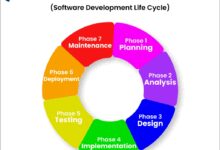
Key Phases in the System Development Life Cycle (SDLC)
The System Development Life Cycle (SDLC) is the backbone of any successful project. It provides a clear roadmap, ensuring that every stage—from idea to implementation—is handled with precision. Following SDLC minimizes risks, reduces costs, and improves the final product’s quality.
Phase 1: Planning and Requirement Analysis
This initial phase sets the foundation. Stakeholders, developers, and business analysts collaborate to define the system’s purpose, scope, and objectives. The goal is to gather comprehensive requirements—both functional (what the system should do) and non-functional (performance, security, scalability).
- Conduct stakeholder interviews and workshops.
- Document use cases and user stories.
- Perform feasibility studies (technical, economic, operational).
A well-documented requirement phase prevents costly changes later. According to the Software Engineering Institute (SEI), up to 70% of project failures stem from poor requirement gathering.
Phase 2: System Design
Once requirements are clear, the design phase begins. This is where architects and developers create blueprints for the system. Design includes both high-level architecture (modules, data flow) and low-level details (database schemas, API contracts).
- Create system architecture diagrams (e.g., UML, ERD).
- Define technology stack (frontend, backend, database).
- Establish security protocols and compliance standards.
Design decisions made here directly impact performance, scalability, and future maintenance. Tools like draw.io or Lucidchart help visualize complex systems before a single line of code is written.
Phase 3: Implementation (Coding)
This is where the actual system development takes place. Developers write code based on the design specifications. Modern practices emphasize clean code, version control (e.g., Git), and collaborative coding environments like GitHub or GitLab.
- Follow coding standards and naming conventions.
- Use integrated development environments (IDEs) like VS Code or IntelliJ.
- Implement modular programming for easier testing and reuse.
Automated linters and static analysis tools help maintain code quality. Continuous Integration (CI) pipelines can automatically test code as it’s committed, reducing bugs early in the cycle.
Phase 4: Testing and Quality Assurance
No system development is complete without rigorous testing. This phase ensures the system works as intended and is free from critical defects. Testing types include unit testing, integration testing, system testing, and user acceptance testing (UAT).
- Automate tests using frameworks like Selenium, Jest, or JUnit.
- Perform load and stress testing for performance evaluation.
- Engage end-users in UAT to validate real-world usability.
According to Gartner, organizations that invest in automated testing reduce post-release defects by up to 50%.
Phase 5: Deployment and Integration
Once tested, the system is deployed into the production environment. Deployment strategies vary—from big-bang (full rollout) to phased or canary releases (gradual rollout to a subset of users).
- Use containerization (Docker) and orchestration (Kubernetes) for consistency.
- Leverage Infrastructure as Code (IaC) tools like Terraform.
- Ensure rollback plans are in place for quick recovery.
Modern DevOps practices enable continuous deployment, allowing teams to release updates multiple times a day with minimal downtime.
Phase 6: Maintenance and Support
After deployment, system development doesn’t end. Maintenance ensures the system remains functional, secure, and up-to-date. This includes bug fixes, performance tuning, security patches, and feature enhancements.
- Monitor system health using tools like Prometheus or New Relic.
- Collect user feedback for iterative improvements.
- Plan for technical debt reduction and legacy system upgrades.
Studies show that maintenance can account for 60–80% of a system’s total lifecycle cost, making proactive support essential.
Popular System Development Methodologies Compared
Choosing the right methodology is crucial in system development. Each approach has strengths and weaknesses, depending on project size, team structure, and business goals. Let’s explore the most widely used models.
Waterfall Model: The Traditional Approach
The Waterfall model is a linear, sequential approach where each phase must be completed before the next begins. It’s ideal for projects with well-defined requirements and minimal expected changes.
- Clear milestones and documentation.
- Easy to manage due to rigid structure.
- Not suitable for dynamic or evolving requirements.
Despite criticism for being inflexible, Waterfall is still used in regulated industries like aerospace and healthcare, where compliance and audit trails are critical.
Agile Methodology: Flexibility and Speed
Agile is the most popular system development methodology today. It emphasizes iterative development, customer collaboration, and responsiveness to change. Work is broken into sprints (usually 2–4 weeks), with regular feedback loops.
- Delivers working software frequently.
- Encourages cross-functional teams.
- Highly adaptable to changing business needs.
The Agile Manifesto outlines core values like individuals over processes and customer collaboration. Frameworks like Scrum and Kanban are widely adopted under the Agile umbrella.
DevOps: Bridging Development and Operations
DevOps is not just a methodology but a cultural shift that unites development and IT operations. It focuses on automation, continuous integration, and continuous delivery (CI/CD) to accelerate system development and deployment.
- Reduces time-to-market significantly.
- Improves deployment frequency and reliability.
- Requires strong collaboration and tooling (e.g., Jenkins, GitLab CI).
According to the Puppet State of DevOps Report, elite performers deploy code 208 times more frequently than low performers.
Prototyping and Rapid Application Development (RAD)
These models prioritize speed and user feedback. Prototyping involves building a preliminary version of the system to gather input before full-scale development. RAD accelerates the process by reusing components and using automated tools.
- Ideal for user-facing applications with unclear requirements.
- Reduces risk of building the wrong product.
- Can lead to scope creep if not managed properly.
RAD is particularly effective in startups and innovation labs where time-to-market is critical.
The Role of System Development in Digital Transformation
Digital transformation is reshaping industries, and system development is at its core. Organizations are no longer just adopting technology—they are reinventing their operations, customer experiences, and business models through custom-built systems.
Enabling Automation and Efficiency
One of the primary goals of system development is to automate repetitive tasks. From robotic process automation (RPA) to intelligent workflows, well-designed systems eliminate manual errors and free up human resources for higher-value work.
- Automate invoice processing, HR onboarding, and customer support.
- Integrate AI-powered chatbots for 24/7 service.
- Use workflow engines like Camunda or Zapier for process orchestration.
McKinsey reports that automation can reduce operational costs by 20–35% in enterprise environments.
Supporting Data-Driven Decision Making
Modern system development includes robust data collection, storage, and analytics capabilities. Systems are now designed to generate insights, not just perform tasks.
- Integrate BI tools like Power BI or Tableau.
- Build real-time dashboards for KPI monitoring.
- Use machine learning models for predictive analytics.
For example, a retail system can analyze customer behavior to recommend products, optimize inventory, and forecast demand—driving revenue and customer satisfaction.
Scaling Business Operations Globally
Well-architected systems allow businesses to scale rapidly. Cloud-native development, microservices, and API-first design enable global deployment with minimal latency.
- Deploy applications on AWS, Azure, or Google Cloud.
- Use CDNs for faster content delivery worldwide.
- Support multi-language and multi-currency features.
Netflix, for instance, relies on a highly distributed system architecture to serve over 200 million users across 190 countries—made possible through advanced system development practices.
Essential Tools and Technologies in System Development
The right tools can make or break a system development project. From planning to deployment, modern developers rely on a rich ecosystem of software and platforms to streamline workflows and enhance productivity.
Integrated Development Environments (IDEs)
IDEs are the primary workspace for developers. They combine code editing, debugging, and testing in a single interface.
- Visual Studio Code: Lightweight, extensible, supports multiple languages.
- IntelliJ IDEA: Powerful for Java and JVM-based applications.
- PyCharm: Ideal for Python development with scientific computing.
These tools offer syntax highlighting, auto-completion, and built-in terminal access, significantly boosting coding efficiency.
Version Control Systems
Version control is non-negotiable in system development. It allows teams to track changes, collaborate safely, and revert to previous states if needed.
- Git is the de facto standard, used by over 90% of developers.
- GitHub and GitLab provide hosting, issue tracking, and CI/CD integration.
- Bitbucket is popular in enterprise environments using Jira.
Without version control, collaborative system development would be chaotic and error-prone.
Testing and Debugging Tools
Ensuring software quality requires specialized tools for different types of testing.
- Jest and Mocha for JavaScript unit testing.
- Postman for API testing and documentation.
- Selenium for automated browser testing.
Debugging tools like Chrome DevTools or Xcode Debugger help identify and fix issues in real time, reducing development cycles.
DevOps and CI/CD Platforms
Continuous Integration and Continuous Deployment (CI/CD) pipelines automate the build, test, and deployment process.
- Jenkins: Open-source and highly customizable.
- GitLab CI: Integrated with GitLab repositories.
- Azure DevOps: Enterprise-grade with robust security.
These platforms ensure that every code change is automatically tested and deployed, minimizing human error and accelerating delivery.
Best Practices for Successful System Development
Following best practices is essential to avoid common pitfalls and deliver high-quality systems. These principles apply across methodologies and project types.
Start with Clear Requirements and Scope
One of the top reasons for project failure is unclear or changing requirements. Invest time upfront to define what success looks like.
- Use requirement management tools like Jira or Trello.
- Document user stories and acceptance criteria.
- Validate requirements with stakeholders before coding begins.
A clear scope prevents feature creep and keeps the team focused.
Prioritize Security from the Start
Security should not be an afterthought. Implement secure coding practices, conduct regular vulnerability scans, and follow frameworks like OWASP.
- Use parameterized queries to prevent SQL injection.
- Implement authentication and authorization (OAuth, JWT).
- Encrypt sensitive data at rest and in transit.
The OWASP Top 10 list highlights the most critical web application security risks—every system development team should be familiar with it.
Embrace Modularity and Reusability
Design systems in modular components that can be reused across projects. This reduces development time and improves maintainability.
- Use microservices architecture for independent deployment.
- Create shared libraries or APIs for common functions.
- Follow design patterns like MVC or Singleton.
Modular systems are easier to test, scale, and update without breaking existing functionality.
Document Everything
Comprehensive documentation is often overlooked but is vital for long-term success. It helps onboard new developers, troubleshoot issues, and maintain consistency.
- Write API documentation using Swagger or Postman.
- Maintain architecture decision records (ADRs).
- Keep user manuals and admin guides up to date.
As the saying goes, “If it’s not documented, it doesn’t exist.”
Future Trends Shaping System Development
The field of system development is evolving rapidly. Emerging technologies and changing user expectations are redefining how systems are built and maintained.
Artificial Intelligence and Machine Learning Integration
AI is no longer a futuristic concept—it’s being embedded into system development. From code autocompletion (GitHub Copilot) to automated testing and anomaly detection, AI is accelerating development cycles.
- Use AI to generate boilerplate code.
- Implement predictive maintenance in enterprise systems.
- Train models to detect bugs or security vulnerabilities.
According to IBM, AI-powered tools can reduce development time by up to 30%.
Low-Code and No-Code Platforms
These platforms allow non-developers to build applications using drag-and-drop interfaces. While not a replacement for traditional system development, they empower business users to create simple tools quickly.
- OutSystems and Mendix for enterprise-grade apps.
- Microsoft Power Apps for integration with Office 365.
- Webflow for no-code website development.
Gartner predicts that by 2025, 70% of new applications developed by enterprises will use low-code/no-code technologies.
Cloud-Native and Serverless Architectures
Cloud-native development focuses on building systems specifically for cloud environments. This includes containerization, microservices, and serverless computing (e.g., AWS Lambda).
- Reduce infrastructure costs with pay-per-use models.
- Improve scalability and resilience.
- Enable faster deployment and rollback.
Serverless architectures eliminate the need to manage servers, allowing developers to focus purely on code.
Sustainable and Green Software Engineering
As environmental concerns grow, the concept of green coding is gaining traction. This involves writing energy-efficient code and optimizing system performance to reduce carbon footprint.
- Optimize algorithms for lower CPU usage.
- Use efficient data structures and caching.
- Host applications in energy-efficient data centers.
The Green Software Foundation is leading efforts to standardize sustainable practices in system development.
What is the system development life cycle (SDLC)?
The System Development Life Cycle (SDLC) is a structured process used to design, develop, test, and deploy information systems. It consists of phases like planning, design, implementation, testing, deployment, and maintenance. SDLC ensures high-quality, reliable software delivery.
What are the most popular system development methodologies?
The most popular methodologies include Waterfall (sequential), Agile (iterative), DevOps (automation-focused), and Rapid Application Development (RAD). Each has its strengths depending on project needs, team size, and business goals.
Why is system development important for businesses?
System development enables automation, improves decision-making through data, enhances customer experiences, and supports scalability. It’s essential for digital transformation and maintaining a competitive edge in the modern economy.
How do Agile and DevOps differ in system development?
Agile focuses on iterative development and customer collaboration, while DevOps emphasizes automation and the integration of development and operations teams. Agile improves how software is built; DevOps improves how it’s delivered and maintained.
What tools are essential for modern system development?
Essential tools include IDEs (VS Code, IntelliJ), version control (Git, GitHub), testing frameworks (Jest, Selenium), and CI/CD platforms (Jenkins, GitLab CI). Cloud platforms like AWS and Azure are also critical for deployment and scaling.
System development is the engine behind digital innovation. From defining requirements to deploying intelligent systems, every phase plays a vital role in delivering value. By embracing proven methodologies, leveraging powerful tools, and staying ahead of trends like AI and sustainability, organizations can build systems that are not only functional but future-proof. Whether you’re a developer, manager, or business leader, understanding system development is key to thriving in the digital age.
Further Reading: